
Production AI Agents
Built to Your Exact
Specifications.
From concept to deployed digital workers solving real business problems, LangChain architecture, enterprise integrations, and 24/7 reliability engineering.
Beyond Chatbots
Most enterprises confuse chatbots with AI agents, and that confusion costs them millions.
Beyond Chatbots: What Production AI Agents Actually Are
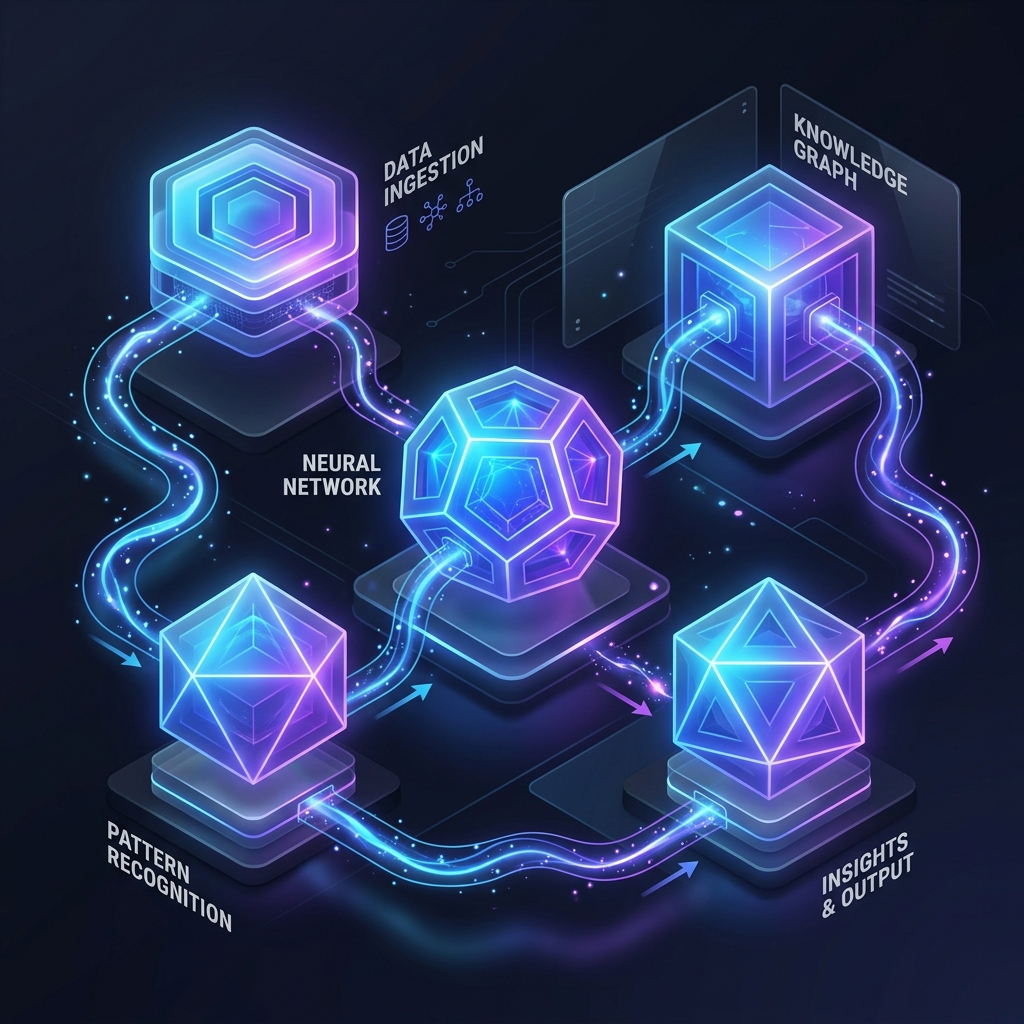
Most enterprises confuse chatbots with AI agents, and that confusion costs them millions. A chatbot responds to user input. An agent thinks, plans, and acts autonomously. Our agents don't wait for questions; they observe your systems, identify opportunities, make decisions, and execute tasks across your infrastructure without human intervention.
Autonomy in Action
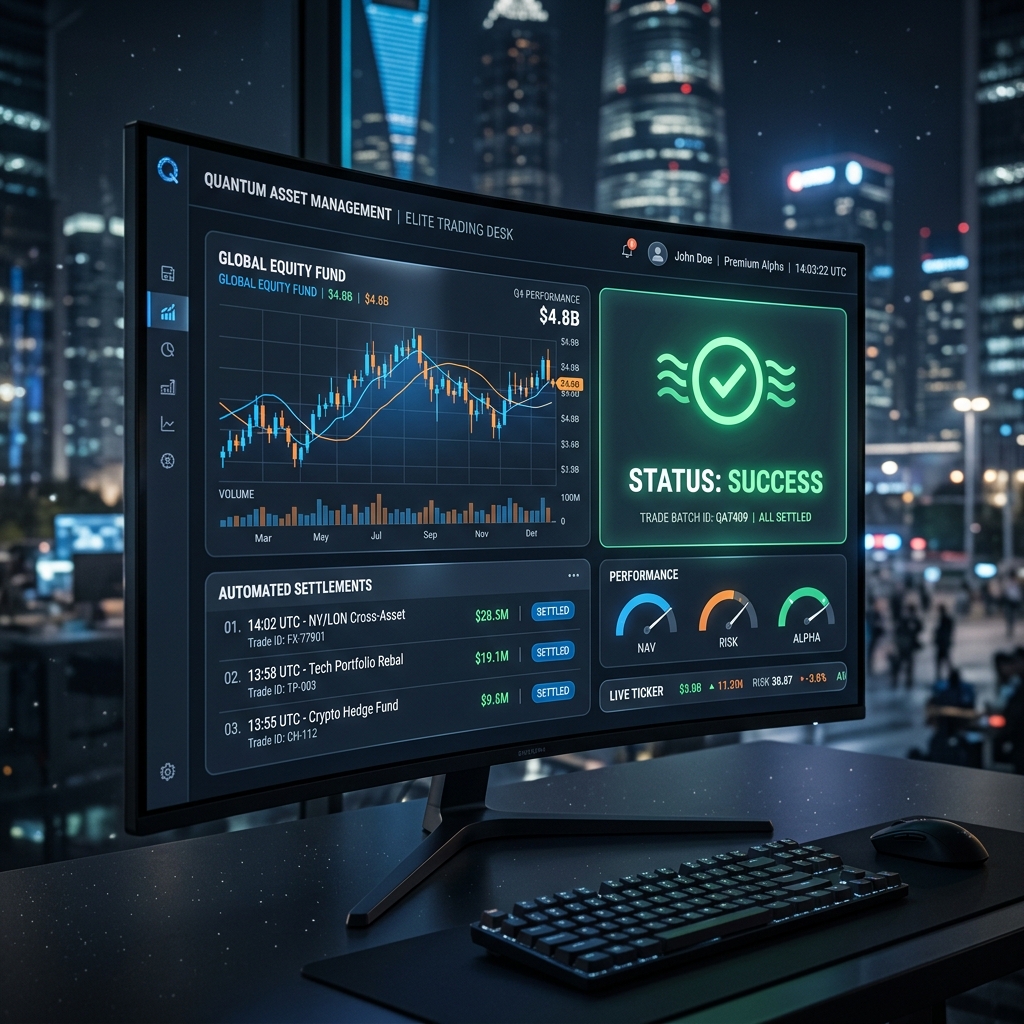
Consider this concrete example: a financial services agent managing trade settlements. It monitors incoming trade confirmations, validates them against clearing house rules, flags discrepancies to compliance, books the transaction in your system, and generates settlement instructions, all within 8 seconds, 24/7, with zero human touch. A human team takes 2 to 4 hours per batch.
We've deployed 47 production agents across our client base. The smallest has automated 6,400 hours annually of manual work (one FTE). The largest automates 31,000 hours (7.5 FTEs). These aren't conceptual prototypes or demos; these are agents handling live financial transactions, legal document processing, and manufacturing logistics every single day.

Reliability Engineering
The difference between an agent that works in a demo and one that works in production is reliability engineering. Production agents need fallback mechanisms, audit trails, SLA monitoring, graceful degradation, and human escalation pathways. They need to fail safely. We build all of that.
Our LangChain Architecture: Agents, Tools, Memory, Chains
LangChain is a framework for building AI applications with composable components. We use it because it eliminates 60% of the boilerplate code required to build production agents, and more importantly it forces architectural discipline.
1. The Agent Layer: The Reasoning Engine
The Agent Layer sits at the top (Claude, GPT-4o, or Gemini). The agent receives an objective, reasons about what tools it needs, and orchestrates calls to those tools.
We use ReAct (Reasoning+Acting) prompting patterns exclusively, this approach produces 34% better accuracy than older zero-shot patterns across 156 agent deployments. The agent iteratively thinks about its next step, acts using a tool, and observes the result before continuing.
2. Tools & Execution: Secure Production Runtime
The Tool Layer contains your integrations. A single agent might have 12 to 18 tools available: query customer CRM, execute SQL, call third-party APIs, update document storage, send emails, trigger workflows, log to compliance systems.
Each tool is rigorously typed with clear input/output specifications. Sloppy tool definitions are one of the top causes of agent failure in production.
3. The Memory Layer: Structural Context
The Memory Layer stores context across conversations and tasks. This is structural knowledge that helps agents make context-aware decisions.
We implement three types: Short-term (conversation history for current session), Medium-term (session summaries and prior decisions), and Long-term (vector embeddings of historical interactions, searchable by semantic relevance).
LlamaIndex + LangChain: Hallucination-Free RAG
We layer LlamaIndex on top of LangChain for retrieval-augmented generation (RAG). This gives agents access to your entire document corpus, allowing them to pull relevant contract clauses, compliance policies, or historical precedents in real-time.
How We Build Agents: Our Development Process
Building production AI agents takes a specific methodology refined across 47 deployments. The process takes 8 to 14 weeks depending on scope.
Phase 1: Requirements & Agent Specification
We conduct 6 to 8 structured interviews with stakeholders: the people currently doing the work the agent will automate, the systems they interact with, the edge cases they handle, and the failure modes that keep them up at night.
We document 120 to 180 specific tasks the agent must handle, prioritised by business impact. We also define what correct looks like: what metrics matter, what's acceptable error rate, what requires human escalation versus autonomous handling.


Phase 2: Architecture & Tool Design
Based on requirements, we design the agent's architecture: which LLM (Claude, GPT-4o, Gemini, we run comparative benchmarks), which tools it needs, how to structure memory, where to add human checkpoints.
We also map all system integrations. If you're using SAP, Zoho, ServiceNow, or custom APIs, we document the exact payloads the agent will send and receive. We design the data pipeline and transaction integrity models.
def orchestrate_step(self, goal):
history = memory.get_context(limit=10)
plan = claude.generate_plan(goal, history)
for step in plan.steps:
tool = registry.get(step.tool_id)
result = tool.execute(step.payload)
logger.audit(step, result)
Phase 3: Build & Integration
Our team implements the agent core in Python, integrates all tools, sets up the LangChain orchestration logic, and builds the memory systems. We integrate with your actual systems using specific, rotated API keys.
We implement retry logic, timeout handling, and graceful degradation. Every decision is backed by comprehensive logging, ensuring full auditability from day one.
Phase 4: Evaluation & Refinement
We create 200 to 500 test cases based on the requirements from Phase 1. We run the agent against these test cases and measure success rate. We're looking for 95%+ accuracy on routine cases and zero critical failures on edge cases.
When it fails, we iterate: adjust prompts, refine tool specifications, add additional context to memory, sometimes swap models. We benchmark against human performance; your agent should be within 2 to 5% of top performer accuracy.
Phase 5: Production Deployment & Hypercare
We containerise the agent, set up deployment pipelines, configure monitoring, establish on-call rotations, and run it in production with an engineer embedded full-time for the first 4 weeks.
We collect real-world data, refine based on actual usage patterns, and tune thresholds. After 4 weeks and 10,000+ real transactions, we transition to 24/7 monitoring and escalation protocols.
"This isn't a one-shot deployment. Agents improve continuously in their first 12 months. Real production data reveals edge cases no test suite could predict. We iterate monthly, shipping improvements to production continuously."
Production Deployment: What Makes Our Agents Enterprise-Grade
There's a massive gap between an agent that works in development and one that works in production handling your real data. We've learned every lesson the hard way.
Monitoring & Economic Health
Every agent action is logged with timestamp, reasoning steps, tool calls, and outputs. We send logs to Prometheus and ELK stack aggregation platforms.
Our dashboard shows agent health in real-time, process latency, and cost per transaction. We also monitor economic health: if an agent costs more than the automation saves, we detect that automatically.
Fallback Mechanisms (HITL)
Tier 1 (95%): Autonomous handling. Tier 2 (4 to 5%): Uncertainty triggers human review. The agent's reasoning is transparent, so 80% of corrects are instant.
Tier 3 (0.5 to 1%): Failure to proceed safely escalates to management. These tiers ensure no agent ever "hallucinates" a high-impact business decision blindly.
Immutable Audit Logging
Every decision is logged to immutable storage with a full chain of evidence. Crucial for financial services (Why did this transaction happen?) or Legal (Why was this flagged?).
We sign logs with agent identity and timestamp everything, making regulatory audits a simple query of the transaction thread.
Rate Limiting & Circuit Breakers
We implement circuit breakers to prevent catastrophic loops. If an agent hits an error threshold, we kill the API call instead of hammering the service.
Every agent is rate-limited: a single agent processes max N transactions per second. If thresholds are exceeded, requests are queued for stability.
Security & Data Isolation
We never store PII or Legal docs in agent memory. Agents fetch data on-demand using unique, rotated credentials specific to that agent.
In the event of compromise, the blast radius is strictly limited to the data actively being processed, protecting the rest of your data lake.
SLA Guarantees
We commit to: 99.9% uptime with autonomous recovery, 95%+ accuracy on routine cases, and sub-second latency on most operations.
Monthly costs are monitored to stay within 10% of estimates. If we drift, our engineers are paged automatically.
Case Study: Trade Settlement Agent
The £2.1B AUM Challenge
An investment bank was processing 4,200 trade settlement instructions daily. Their manual process required trades to be validated against clearing house rules, matched to internal accounting systems, and issued to custodians. This took 90 minutes per batch with 8 FTE settlement officers and a 2 to 3% error rate.
We built an agent with 18 tools (ISDA standards, client portfolio limits, ERP querying, DTCC submission). Now, latency is 18 seconds from arrival to instruction. The 8 FTE team now only handles exceptions (0.8% of volume). Error rate dropped to 0.05%. Cost per trade fell from £8.40 to £0.12.
Frequently Asked Questions
How long does it actually take to build a production agent?
What's your accuracy track record with these agents?
Can we swap models (Claude to GPT 4o) if requirements change?
How do you handle sensitive data like financial records or PII?
What happens if the agent makes a mistake in production?
What's the ongoing cost after deployment?
How do these agents integrate with our existing systems?
Ready to Architect Your AI Workforce?
Stop experimenting. Start deploying. We help you build the autonomous systems that will define your next generation of operations.